
Basement & Crawlspace Radon Mitigation in Lubbock
Most of Texas is slab-on-grade. Lubbock isn't: partial basements, full basements, and dirt crawlspaces sit alongside slab homes across the South Plains, and the right fix depends on which one you have.
- Independent & local-first
- No-pressure referrals
- Free TTU test-kit info
Does your foundation type change how radon gets fixed in Lubbock? Yes, and it's one of the more genuinely local things about radon here. Slab-on-grade homes and basement floors are treated with sub-slab depressurization: a suction point drawn from under the concrete pulls soil gas out before it can seep in. Dirt crawlspaces get a different system: sub-membrane depressurization, where a sealed liner covers the exposed dirt and a suction point pulls gas out from underneath it. Submitted local test data covers all three foundation types, which tells you Lubbock's radon story isn't a slab-only one like it is across most of the state.
What is the safest foundation for radon?
No foundation type is immune to radon. Basements put more square footage of concrete and soil in direct contact with living space, which can mean more entry points, but slab-on-grade homes test high in Lubbock too. Submitted local readings show elevated levels across slab, basement, and crawlspace homes alike.
It's tempting to assume a slab home is safer than one with a basement, since less exposed foundation touches the ground. In practice, radon finds its way in through whichever path is open: cracks in a slab, a sump pit, a crawlspace's exposed dirt, or the seam where a basement wall meets its footing. Lubbock's caliche and limestone-rich soils generate radon regardless of what sits on top of them, and the submitted test results reflect that: high readings turn up in ranch-style slab homes just as often as in homes with a full basement. Foundation type changes the mitigation approach. It doesn't change whether testing your specific house is worth doing.
Can you mitigate a house without a basement?
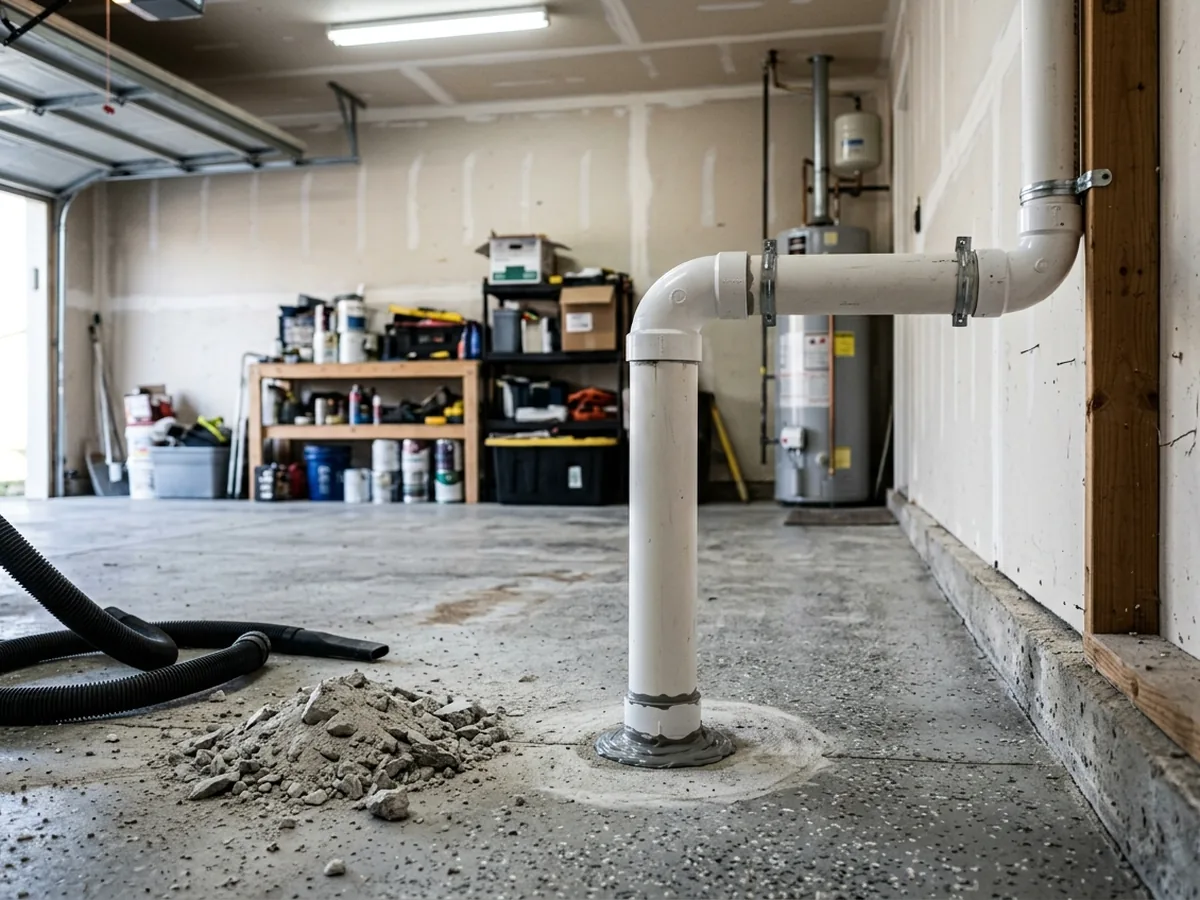
Yes: most Lubbock radon systems go into slab-on-grade homes, since that's the majority of the local housing stock. Sub-slab depressurization works the same way whether or not a basement is involved: a suction point under the concrete, a pipe routed up and out, a fan pulling soil gas away from the house.
A basement is just one more type of concrete floor a system can be installed through, not a requirement for mitigation. On a slab home, the installer finds a spot (often a closet, garage, or utility area) to core a small hole, insert the suction point, and run pipe up through the house or along an exterior wall to above the roofline. The system pulls air from under the slab continuously, creating negative pressure that keeps soil gas from finding its way inside. It's the most common radon fix nationally, and the most common one in Lubbock specifically, since slab-on-grade construction dominates here even with the city's basement and crawlspace pockets.
What if there's no gravel layer under my slab?
Sub-slab systems work best when a gravel or aggregate layer under the concrete lets air move freely to the suction point. Without one (common in older homes and in West Texas's tight caliche soils), a pro tests soil-gas communication under the slab first, and sometimes needs more than one suction point to cover the house.
This is exactly the kind of thing a documented quote should address before anyone drills a hole. Caliche and other tight West Texas soils don't move air the way loose gravel does, so a suction point that would depressurize an entire slab in a sandier region might only pull effectively from a few feet around it here. A competent installer checks this with a smoke-pencil or manometer test before finalizing the design: pulling air from one point and watching whether pressure drops across the rest of the slab. If it doesn't communicate well, the fix is more suction points, not a bigger fan. It's a reasonable question to ask any pro quoting a Lubbock home.
How does crawlspace (sub-membrane) mitigation work?
Dirt crawlspaces don't have a slab to depressurize, so the approach is different: a heavy plastic liner is sealed over the exposed dirt floor, walls, and piers, and a suction point pulls air from underneath that membrane instead of from under concrete. It's called sub-membrane depressurization, and it's a standard, well-documented method.
A sealed crawlspace does two things at once: it stops soil gas (and moisture) from entering the space directly, and it gives the suction point a contained area to pull negative pressure from, the same principle as sub-slab depressurization applied to a liner instead of concrete. Seams get taped, penetrations around piers, plumbing, and ductwork get sealed, and the liner runs up the foundation walls a few inches. For homes with a mix of slab and crawlspace areas (not uncommon in older Lubbock construction), a system sometimes needs to address both zones. It's worth asking any pro who quotes a crawlspace job whether they're proposing full membrane coverage or a partial seal, since coverage gaps are the most common reason a sub-membrane system underperforms.
Do basements in Lubbock need radon testing?
Yes. Basement and partial-basement homes actually offer a larger soil-contact surface (more wall, more floor, more seams), which means more potential entry points and, often, better mitigation candidates once a system goes in. Skipping the test because a home has a finished basement isn't a shortcut worth taking.
It's a common assumption that a basement is somehow separate from "radon houses," as if radon were only a slab problem. The opposite is closer to true: more contact with the soil means more surfaces for gas to move through, not fewer. The upside is that basements also tend to be strong mitigation candidates, since a sub-slab system installed in a basement floor often has more room to work with than a cramped crawlspace or a slab poured tight to a garage wall. If your Lubbock home has any basement (full, partial, or walkout), treat the test the same way you would for a slab home: as the only way to know your actual number.
How this works
Related reading
For the broader picture on active soil depressurization and what a proper quote includes, see Radon Mitigation in Lubbock. If you haven't tested yet, start with Radon Testing options, including the free TTU kit. And for real Lubbock price ranges by foundation type, see Radon Mitigation Cost.
How do you connect me with a radon pro?
Tell us your foundation type
Slab, basement, or crawlspace: call or use the short form and describe what you're working with.
We connect you with a local pro
An independent radon professional who works every Lubbock foundation type: slab, basement, and crawlspace.
You deal direct
The pro inspects your specific foundation, quotes you, and does the work. No markup passes through us.
Get connected with a Lubbock radon pro
Three fields, no spam, no obligation. Or skip the form: (806) 329-4585.
We pass your info to one local radon professional so they can contact you about your request: nothing else, no lists, no resale.